

Event Photography Brief Template
You’ve booked your photographer. The venue is confirmed, the run-of-show is drafted, and the catering order is in. But there’s one thing many event planners skip — or leave until the last minute — that has an outsized impact on the quality of your final photos: the photography brief.
A well-written brief is the difference between a photographer who shows up and figures it out as they go, and one who arrives on event day already knowing your VIPs by name, your three non-negotiable shots, and exactly what the photos will be used for.
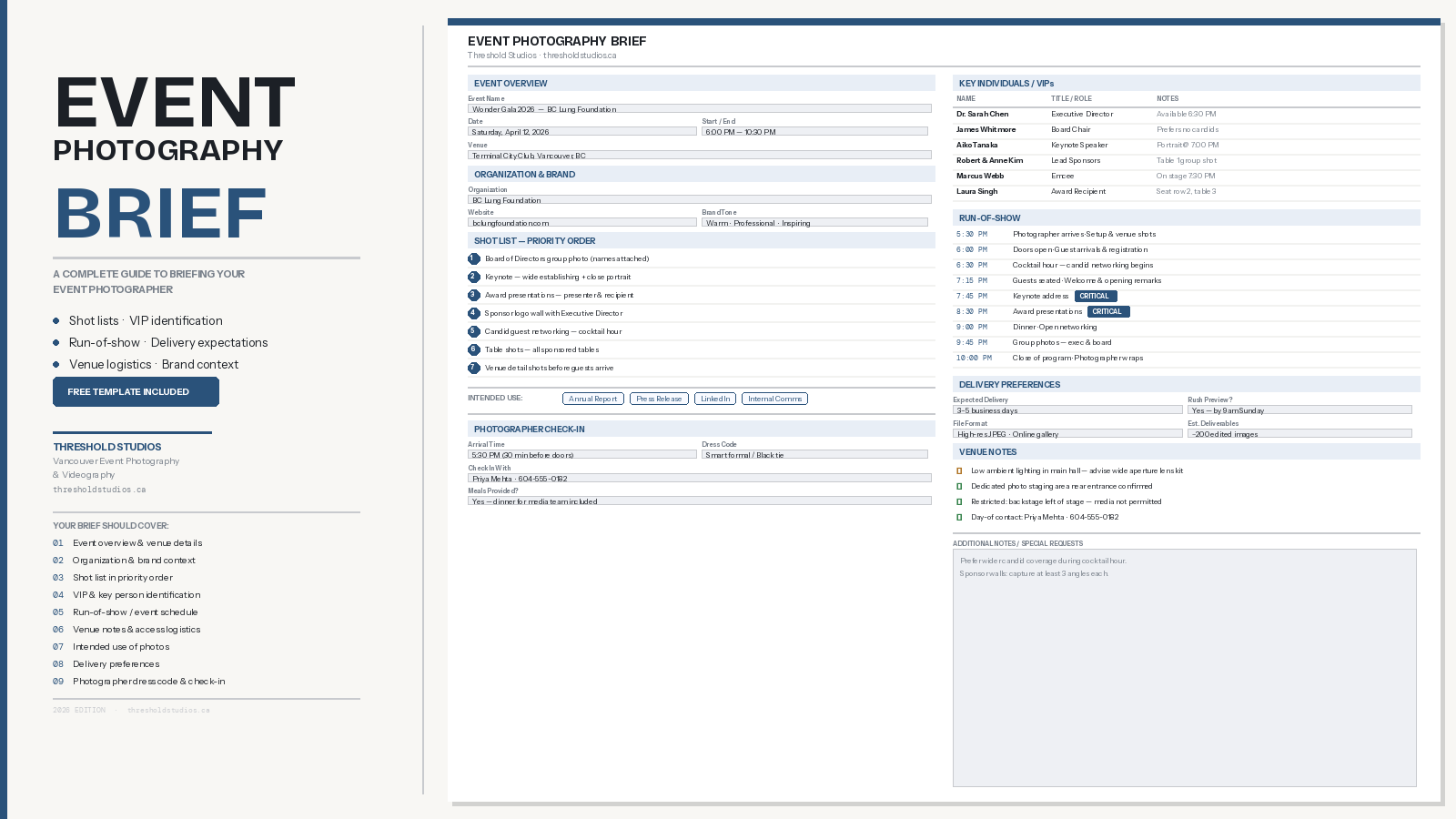
This guide covers everything that should go into a photography brief, why each element matters, and includes a free template you can copy and send to your photographer before your next event.
What Is an Event Photography Brief?
A photography brief is a short document you send to your photographer — ideally 1–2 weeks before the event — that gives them everything they need to shoot strategically rather than reactively.
Think of it like a stage manager’s script. Your photographer doesn’t need to know what the caterer is serving, but they do need to know when the keynote starts, who the board chair is, and whether the award presentations happen before or after dinner.
A good brief takes you about 30 minutes to write. It saves you hours of back-and-forth and significantly reduces the chance of walking away from your event missing a critical shot.
What to Include in Your Event Photography Brief
1. Event Overview
Start with the basics. Your photographer needs context before they can make good decisions in the field.
Include the event name, date, start and end time, and the full venue address (including floor or room name — many Vancouver venues like the Fairmont Hotel Vancouver or the Vancouver Convention Centre have multiple event spaces across different levels). If the event spans multiple locations or moves between rooms, note that here.
Also include a one or two sentence description of what the event is and what it’s for. Is it a fundraising gala? An annual general meeting? A product launch? A conference? This context shapes how a photographer approaches tone — a charity gala calls for warmth and storytelling; a C-suite strategy summit calls for clean, formal corporate imagery.
2. Your Organization and Brand
Your photographer is representing your brand through their lens. Give them enough context to make decisions aligned with your visual identity.
This doesn’t need to be lengthy. A brief description of your organization, a link to your website, and a note about your brand tone (formal and conservative vs. energetic and modern, for example) is sufficient. If you have a brand guide or a style reference — even just a few example images that represent the look you’re going for — include those.
3. Shot List: Your Non-Negotiables
This is the most important section of your brief. A shot list is a prioritized list of specific photos that must be captured — images your organization needs regardless of anything else that happens at the event.
Structure your shot list in priority order. If the gala runs long and your photographer has to make tough choices in the final hour, you want them prioritizing the right things.
Examples of common shot list items:
- Board of Directors group photo (full board, names provided separately)
- Keynote speaker at the podium — wide establishing shot and close-up portrait
- Award presentations — presenter handing award, recipient receiving, both facing camera
- Sponsor recognition — logo wall with executive in frame
- CEO networking with guests (candid)
- Table shots during dinner — each sponsored table photographed
- Guest registration / arrivals
- Venue detail shots: centrepieces, signage, stage setup before guests arrive
Be specific. “Group photos” is vague. “Group photo of the five-member executive team, names listed below, to be taken during the cocktail hour before 7:00 PM” is actionable.
4. VIP and Key Person Identification
This is the section most event planners forget — and the one that causes the most frustration after the fact.
Your photographer cannot recognize your board chair, your major donor, your keynote speaker, or your organization’s founder without help. If these individuals appear in the background of a candid shot and your photographer doesn’t know who they are, that moment is gone.
Provide a list of key individuals with:
- Full name and title
- A headshot or LinkedIn photo (this is critical — your photographer should be able to recognize them in a crowded room)
- Any notes about their availability or preferences (e.g., “Chair prefers not to be photographed eating,” or “Speaker only available for portraits during the 6:00 PM break”)
For very large events, you don’t need to list every guest — focus on the top 5–10 people who must appear in your final gallery.
5. Event Schedule (Run-of-Show)
Provide your full run-of-show, or at minimum a photography-relevant version of it. Your photographer needs to know:
- When doors open / guest arrivals begin
- When key program moments happen (welcome remarks, keynote, awards, entertainment)
- When breaks occur (useful for scheduling portraits or group shots)
- When the event ends and teardown begins
Highlight any moments that are time-sensitive or easy to miss. Award presentations are often rushed; if the photographer isn’t in position 5 minutes early, they miss the moment entirely.
6. Venue Details and Access
Even experienced photographers benefit from a venue briefing. Include:
- Venue name and full address
- Parking or load-in instructions
- Who to check in with on arrival and their contact number (this should be someone who will actually be reachable, not you while you’re managing 300 guests)
- Any areas that are restricted or off-limits to photographers
- Any areas that are particularly important to capture (custom installations, sponsor displays, registration areas)
- Notes on challenging lighting (very dark ballrooms, mixed colour temperature lighting, outdoor areas subject to changing light)
If you’ve worked with the venue before and know about specific challenges — a stage with a bright red exit sign in the background, a room with no natural light and poor overhead fixtures — tell your photographer in advance. This isn’t complaining; it’s giving them the information they need to bring the right equipment and plan their angles.
7. Intended Use of the Photos
Where are these images going? This single question changes how a photographer frames and edits your photos.
Images destined for a formal annual report need clean backgrounds, formal compositions, and conservative editing. Photos for LinkedIn or social media can be more candid, energetic, and tightly cropped. Press release images need horizontal framing with space for text overlay. Internal communications can be more relaxed.
Tell your photographer:
- Primary use (annual report, press release, social media, event promotion, internal newsletter)
- Any specific format requirements (horizontal vs. vertical, space for text overlay, specific aspect ratios for social platforms)
- Whether you need any images delivered urgently — say, by the following morning for a press release
8. Delivery Preferences
Confirm your delivery expectations in writing so there are no surprises on either side.
Include:
- Expected delivery date (or ask your photographer to confirm their standard turnaround)
- Preferred delivery method (most studios use online gallery platforms like Pixieset or Google Drive)
- Approximate number of edited images expected
- Whether you need a small same-day or next-day preview selection
- File format requirements (JPEG is standard; RAW files are typically not included unless arranged separately)
9. Photographer Dress Code and Logistics
For corporate and gala events especially, let your photographer know the dress code. A professional photographer at a black-tie gala should be dressed accordingly — smart formal attire, not jeans and a t-shirt. At a casual outdoor fundraiser, the opposite is true.
Also include:
- Whether meals or beverages will be provided for the media team
- Whether they’ll have a dedicated workspace or staging area
- The name and phone number of your day-of contact
A Few Final Tips
Send the brief early, not the night before. Your photographer needs time to review it, ask follow-up questions, and prepare equipment specific to your venue and lighting situation. One week before is good; two weeks is better.
Schedule a 15-minute briefing call. A brief document plus a short call eliminates almost all miscommunication. Use the call to walk through the shot list, confirm VIP identification, and answer any questions your photographer has about the run-of-show.
Update it if things change. Events shift. Speakers cancel, schedules move, award recipients change. If anything significant changes after you’ve sent the brief, send an updated version and flag what’s new.
Share it with your day-of contact. The person managing the event floor on the day should also know the shot list and VIP list. They’re your photographer’s eyes and ears in the room when you’re pulled away.
A great photography brief doesn’t guarantee great photos — but it eliminates almost every preventable reason for missing a critical shot. It takes 30 minutes to write and pays dividends every time you open your final gallery.
Need a Photographer for Your Vancouver Event?
Threshold Studios works with corporate clients, nonprofits, and event planners across Metro Vancouver. We’ll review your brief, ask the right questions, and show up on event day knowing exactly what you need.
Request a custom quote and we’ll get back to you within 3 hours.